
No. 515 | April 3, 2026
Weekly Report 515
The weekly average price of Brent crude oil increased again this week, rising by $4.9 to reach $110.3 per barrel. Iran's rejection of the United States' 48-hour ceasefire proposal and the continuation of attacks by both sides on civilian infrastructure in the region have kept tensions high. Data shows that crude oil loading from Middle Eastern ports has decreased by 70% to only 5.2 million barrels per day. Following the targeting of a VLCC in Kuwait and an oil tanker belonging to Qatar Energy by Iran, the shipping route through the Strait of Hormuz is still considered unsafe, and traffic through this route remains limited. The official entry of the Houthis from Yemen into the war between the U.S. and Israel against Iran and the threat to close the Bab-el-Mandeb Strait could make conditions more difficult for the oil market, as hopes for an end to the conflict diminish. Instability in the oil market and rising prices have also impacted the economic situation. High oil prices could prevent a decrease in inflation levels and, by creating weakness in economic growth, will reduce oil demand. Currently, the oil market is expected to remain highly volatile due to developments in the Middle East, and disruptions in traffic through the Strait of Hormuz will keep price levels elevated. At present, any decrease in oil prices will depend on signs of an end to the conflict in the region and the reopening of the Strait of Hormuz.
The weekly average price of naphtha, FOB Persian Gulf index, increased by $47 to reach $1065/ton. Given the sharp decline of $23 in Dubai crude, the naphtha margin in the Persian Gulf saw a significant increase of $29, marking positive price levels in this timeframe for the first time in 5 years. While disruptions in the Strait of Hormuz had given Asian buyers hope for Russian supplies, Ukraine's renewed attack on the Russian Ust-Luga terminal has also put the supplies from this region at risk of disruption. As naphtha supply faces interruptions, South Korea has also banned naphtha exports to meet domestic needs, leading to a decrease in regional supplies in Asia. Although the ethylene-naphtha margin is at high levels, this growth is primarily due to the limited ethylene supply caused by the shutdown of steam crackers, which cannot create additional demand for naphtha. Moreover, the sharp rise in naphtha prices compared to liquefied gas has made the feedstock more favorable with liquefied gas. In the aromatics sector, the increase in naphtha feedstock prices has significantly impacted profit margins, making the production of aromatics economically unviable. Despite the open arbitrage of naphtha from the West of Suez, the received naphtha flow has been insufficient, and it is expected that as the war in the Middle East continues, the naphtha market will remain volatile and supportive, similar to crude oil.
The weekly average price of 95 octane gasoline, based on the FOB Persian Gulf index, increased by $2 to reach $139/barrel. Considering the sharp decline in Dubai oil prices, the refining margin in the Persian Gulf rose by $26, reaching the highest levels for this time of year in the past 5 years. The reduction in supply from the Middle East due to traffic disruptions in the Strait of Hormuz on one hand, and the regional supply decrease due to prioritizing domestic needs of countries, has led to a supply constraint in the gasoline market. However, in recent weeks, supplies from India have managed to compensate for part of the supply shortfall and have slowed down the upward trend in gasoline prices. Currently, despite rising product prices, regional demand remains relatively stable due to governments' efforts to provide fuel subsidies, absorbing the gasoline available in the market. Additionally, Pertamina, as the largest gasoline buyer in the region, has held 5 purchase tenders. Given the existing demand in the market, it is expected that the gasoline market will maintain its high price levels amidst the turmoil of the Middle East, and the refining margin will remain volatile.
The global ammonia market is currently under the influence of dual pressures stemming from the paralysis of exports in the Middle East and operational crises in Australia, leading to supply bottlenecks and unprecedented price surges. While the Middle East, as a major supply hub, has faced a 92% reduction in loading volumes in March (from 395,000 tons to only 30,000 tons) and most Saudi Arabian export units are offline for safety reasons, on the other front, the sudden and unexpected shutdown of the Pilbara unit in Australia has transformed the country from a supplier into a product demander. This convergence of crises has led Australia to import emergency shipments at $900/ton from distant sources such as Oman, China, and Indonesia to compensate for its production shortfall during a 4 to 6-week maintenance period, which has imposed additional price pressure on traditional buyers in India and East Asia. On the other hand, the consequences of this widespread disruption in the Middle East and Australia have caused the world's phosphate giant (OCP Morocco) to halt 30% of its second-quarter production due to a lack of access to the required ammonia. Given the uncertainty regarding the exact timing of the return of production units in Saudi Arabia and the ongoing maintenance period in Australia, the market is expected to remain under supply constraint pressure, and the flow of product from the Atlantic (Gulf of America and Trinidad) towards East Suez to fill this supply gap will continue.
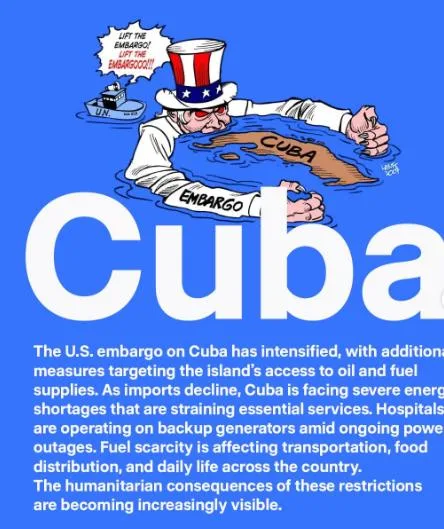
Three months after the land blockade of Cuba by the United States, officials from this country announced last week that after obtaining implicit approval, in fact, the lack of opposition from Trump for the import of energy shipments, they are awaiting the arrival of a Russian tanker carrying 1,000 barrels of crude oil from this country. Finally, this tanker named "Anatoly Kulodkin," which carries about 730,000 barrels of crude oil, arrived at its destination, the city of Matanzas (on the northern coast of Cuba), last week after many ups and downs. The blockade of Cuba reaches three months as this country faces a serious energy crisis. Severe fuel shortages, lack of electricity, and lack of access to public services are the main challenges of daily life for people in Havana and other cities in Cuba. It is worth mentioning that this shipment is not a solution to Cuba's crisis, as experts estimate that this shipment can only produce about 180,000 barrels of diesel, which is sufficient to meet Cuba's daily needs for 9 to 10 days. However, the Cuban government continues its consultations with the United States and Russia, and according to the Russian energy minister, a second shipment will soon be delivered to this country. The United States is currently acting as the biggest risk in the energy market, ranging from war to sanctions and blockades. This performance has so far resulted only in supply disruptions and rapid price increases.